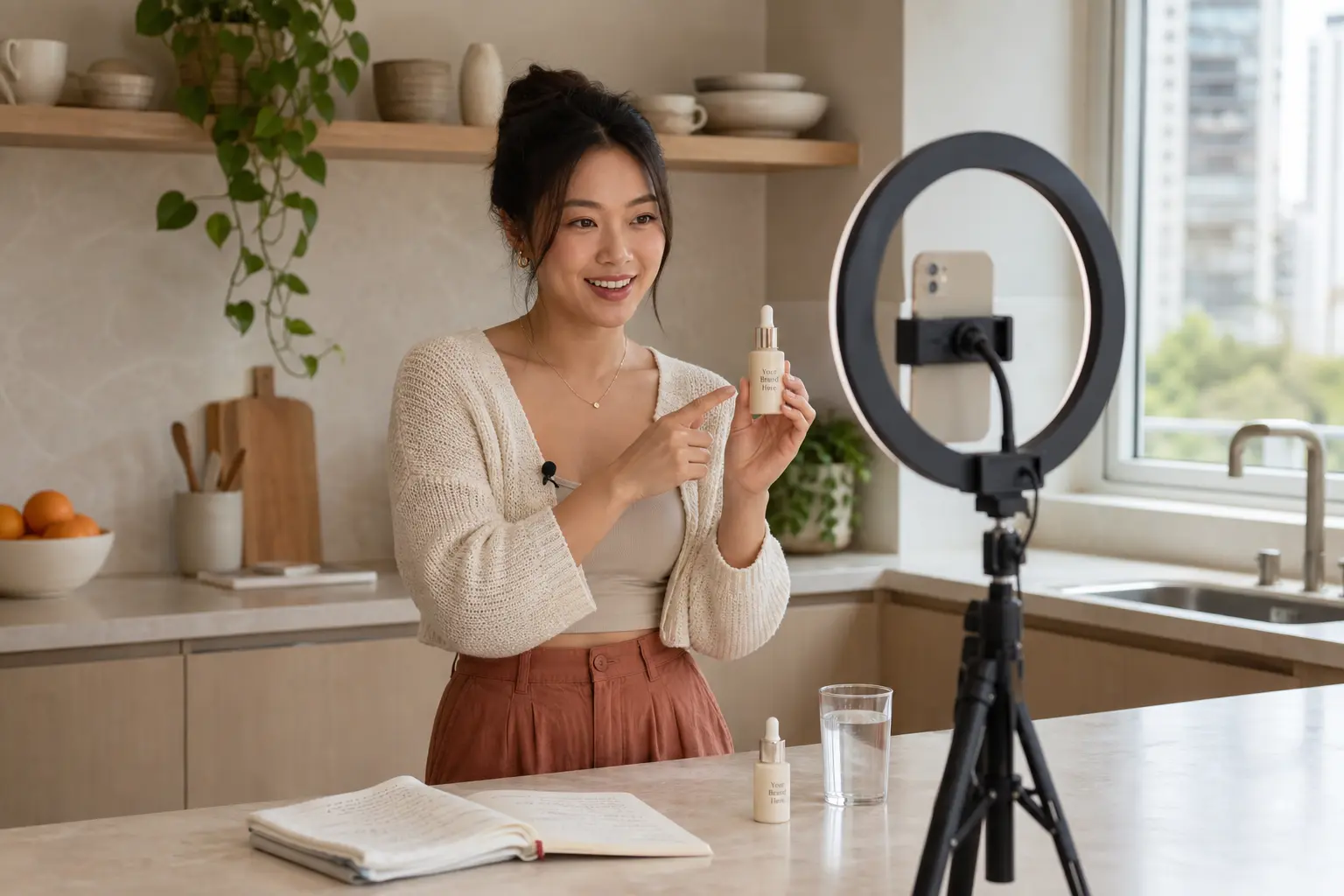
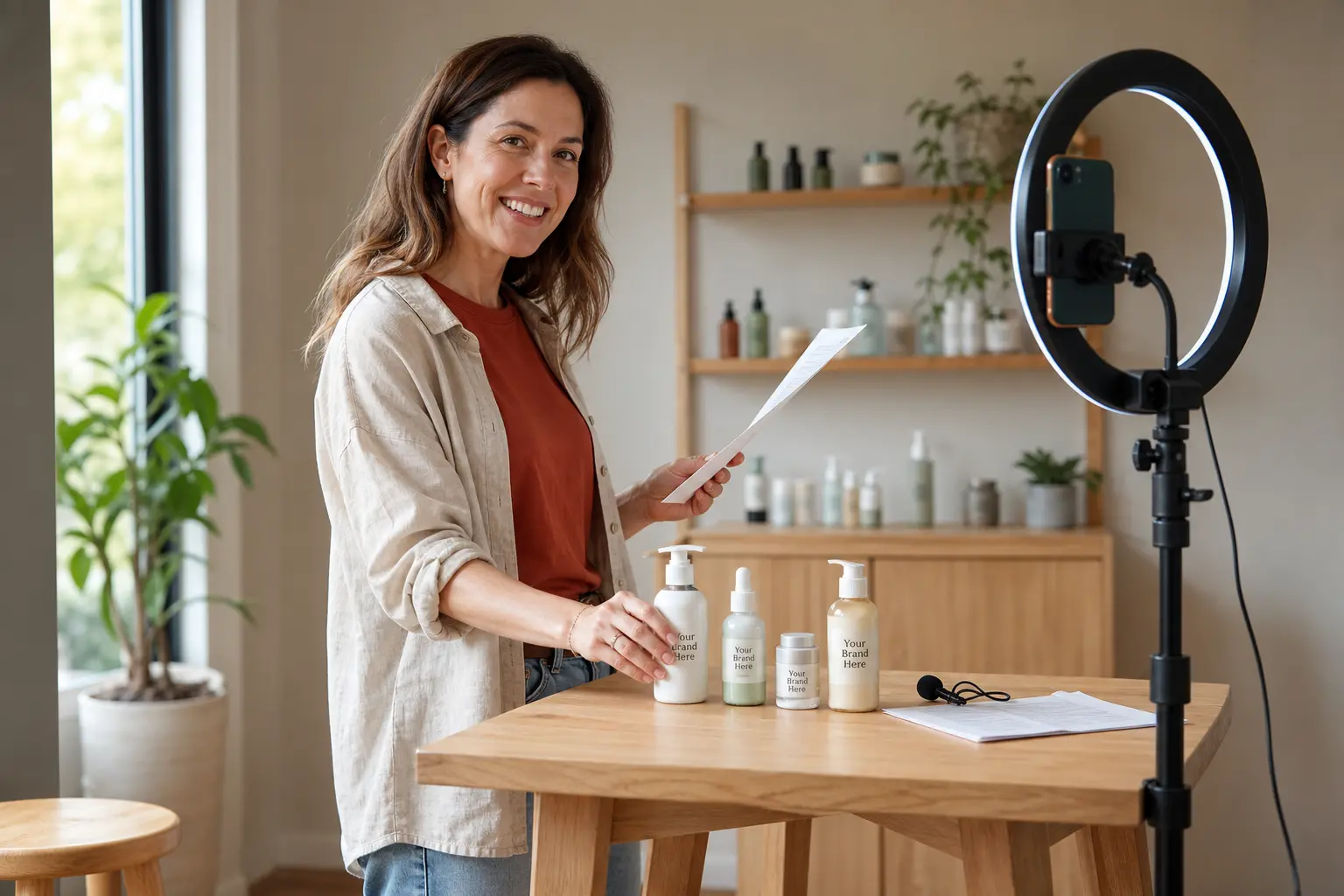
Cosmetics influencer marketing is the practice of partnering with content creators whose audiences trust their product recommendations, sending them your products with or without payment, and turning their genuine response into discovery and sales for your brand.
It is not the same job as paying a celebrity to hold your bottle.
Most influencer marketing content online is written for brands with quarterly budgets of 50,000 EUR/USD or more. Founders read those guides, see rates of 5,000 EUR per Reel, and conclude the channel is not for them. (All cost figures in this article are indicative estimates that vary by region, tier, and category.)
That conclusion is wrong.
The brands that scale with influencer marketing in 2026 are usually not the ones with the biggest budgets.
They are the ones that built genuine relationships with smaller creators and stayed consistent over many months.
After 30 years in the hair and beauty sector, most recently in private label cosmetics across Europe, Turkey, China, and the USA, I have watched founders waste money on big-name partnerships and watched them grow brands with 200 EUR seeding boxes. This guide builds on the marketing strategy framework.
All numbers below are indicative estimates, not promises.
This guide covers why influencer marketing works for indie cosmetics, how to find the right creators, what to pay in 2026, the outreach process, and the mistakes that quietly drain influencer budgets.
Why Influencer Marketing Works for Indie Cosmetics
Influencer marketing is one of the few channels where indie brands have a structural advantage over scaled brands.
The numbers say the same thing.
Indie beauty brands generate roughly 88% of their attention organically, versus 64% for portfolio brands (Traackr, 2025 Indie Beauty Brand Insights Report, on more than 250 beauty brands in the US, UK and France).
That gap is the entire game.
Scaled brands rely on paid partnerships and contractual deliverables. Indie brands rely on creators who actually use the product and want to talk about it.
The second model converts at higher rates because it does not feel like advertising.
The brands that scale with influencer marketing in 2026 are usually not the ones with the biggest budgets. They are the ones with the most genuine creator relationships.
Why nano and micro creators outperform big names for cosmetics
The instinct of most first-time founders is to chase reach.
Bigger creator equals bigger audience equals bigger results. That logic is wrong for indie cosmetics in nearly every case.
Nano creators (1,000 to 10,000 followers) are the most engaged tier on every platform measured: 1.73% on Instagram against 0.68% for mega-influencers, and 10.3% on TikTok against 7.1% (HypeAuditor, The State of Influencer Marketing 2025, on 2024 data, with the engagement rate calculated on followers). Read any tier comparison with its denominator attached, because rates calculated on views run several times higher and are not the same measure.
Their audiences are niche-specific and treat creator recommendations like advice from a friend.
Micro creators (10,000 to 100,000 followers) are the tier you move to when nano cannot give you enough reach. On engagement they land between nano and the big accounts, so the argument for them is the price of a post, not a multiplier on interactions.
The cost-to-result math is brutal at the bigger end.
A macro creator (100,000 to 500,000 followers) can charge 2,500 to 20,000 EUR for a single Instagram post, with engagement rates often below 2%. The same budget spent across 20-30 nano creators usually generates more total engagement, more authentic content, and more downstream sales.
For an indie cosmetic brand, the right tier is almost always nano and micro.
The exception is if you are targeting a specific niche where one mid-tier creator dominates the conversation. Even then, the right move is usually long-term partnership, not one-off paid drops.
Why this works specifically for cosmetics
Cosmetics is one of the highest-performing categories on social media.
Beauty and personal care are the top-selling category on TikTok Shop globally. The category fits the formats creators publish naturally: tutorials, transformation content, daily routines, ingredient breakdowns.
A creator can demonstrate a product in 30 seconds in a way that a polished brand ad cannot replicate.
The visual demonstration is everything in cosmetics. Texture, application, finish, before-and-after. These signals decide whether a viewer adds to cart or scrolls past.
This is why influencer-driven content often outperforms brand-produced content for cosmetic launches, even when the brand has a bigger production budget.
The viewer trusts the messy iPhone footage more than the polished studio shot.
Counterintuitive at first, but it is consistent across every cosmetic category I have observed in the last five years.
Influencer marketing as part of the ecosystem
Influencer marketing is not a separate function from the rest of your marketing strategy.
It feeds and is fed by your other channels.
Influencer content fuels paid social creative. The creator drops a TikTok, you license the best-performing assets, and your paid spend goes behind content that has already proven it works organically.
Influencer-driven traffic to your Amazon listings produces an algorithmic ranking boost that lifts organic visibility for weeks afterward, as covered in the Amazon launch guide.
Influencer partnerships build the social proof that converts your direct e-commerce traffic into customers.
Influencer marketing is rarely a standalone strategy. It is the discovery and trust layer that makes the rest of the marketing system work.
How Do You Find the Right Influencers for Your Brand?
This is the question most founders get wrong.
The instinct is to search by follower count, sort top down, and reach out to the biggest accounts in beauty.
That approach produces low response rates, expensive partnerships, and content that does not convert.
The better approach starts with audience match, not follower size. And it starts earlier than most founders think.
Stage zero: friends and close contacts before any external creator
Most founders skip this step entirely.
They finish production, immediately start hunting nano creators on TikTok, and miss the cheapest and most underused source of social proof available to them.
The first 5-10% of your production run should not go to creators at all.
It should go to friends, family, colleagues, and people you already know who match the customer profile of the brand.
Real people who fit the customer you are trying to reach, not a random handful of contacts.
This stage costs almost nothing. The product is already produced, the contacts already trust you, and the feedback you get is honest in a way no creator partnership can replicate.
What you collect from each tester:
A short written review of 1-3 lines is enough. A natural selfie video of 10-20 seconds in vertical format.
One or two photos with the product. A simple permission to use their content publicly.
The video does not need to be polished. iPhone footage in good light is exactly what works.
The first 5-10% of your production run is your cheapest social proof and your most honest product feedback. Most founders waste it on personal use.
This stage produces three outcomes that compound across everything that follows.
Real product feedback before scaling. People you know are more open about what does not work. Texture, scent, packaging, results. The patterns that emerge here are the ones you address before placing the next manufacturing order.
A small library of authentic testimonials. Real reviews and real videos that go on your product pages, your launch emails, and your initial paid ads. Social proof that converts, built before any external creator ever sees the product.
A clearer brief for the nano creators that come next. You arrive at the influencer outreach phase already knowing what works in your product, what people respond to, and what messages convert. The nano creator stage becomes faster and more precise.
The execution requires structure or it produces inconsistent results.
Choose people who match your future target customer, not just whoever is closest to you. Prepare a short script before contacting them so the request is clear. Include a simple "How to Test" sheet inside the package that lists what feedback you need (first impressions, fragrance, texture, results after several uses, what they liked, what they did not). Set a clear test window, usually 5-7 days. Ask for the feedback in one message via WhatsApp, Instagram DM, or email so nothing gets lost.
A simple permission agreement protects both sides. Even with friends, content rights need to be in writing before you use their face in a paid ad. The agreement does not need to be a formal legal contract at this stage. It needs to confirm they understand the content may be used in your marketing and they grant you the right to use it.
Once this stage is complete, you have your first social proof, the product is one iteration better, and you are ready for external creators.
Now you can find them.
Define your customer first, then reverse-engineer the creator
Before any creator search, you need clarity on who your customer actually is.
Demographics: age, location, language, income range. Psychographics: values, aesthetic preferences, what they care about beyond the product category.
Behavior: which platforms they use, which creators they follow, which beauty conversations they engage with.
Without this clarity, every creator looks acceptable and none of them are right.
The exercise that works: pick three of your existing customers, or three customers from a similar brand if you do not have customers yet.
For each, list the 5-10 creators they probably follow on TikTok or Instagram.
The pattern emerges quickly. Certain creators show up across multiple customer profiles. Those are your priority targets.
Where to actually look
Several search paths produce better results than generic Instagram or TikTok scrolling.
Hashtag exploration on platforms specific to your niche. For skincare, hashtags like #skincareroutine #skintok #skinminimalism. Search the hashtag, sort by recent posts, identify creators producing consistent content in your specific sub-niche.
Comment archaeology on competitor and adjacent brand pages. Creators who frequently comment on similar brands' posts are often actively looking for partnerships in your category.
The brands they engage with reveal the gaps your brand could fill.
Saved post analysis. The creators whose content gets saved most often by your target audience are the high-influence creators in that micro-community.
Saves are a stronger signal than likes because they indicate planned action.
Brand fan lists. Look at the creators tagging your brand or competitor brands without being paid. These are warm leads. They already use products in your category and have demonstrated willingness to talk about them.
For founders who reach scale, influencer marketing platforms (GRIN, Aspire, Modash, Statusphere, Traackr) speed up discovery and tracking. Worth the investment once you are managing more than 20-30 active creator relationships. Below that scale, manual sourcing usually produces better fit.
Vetting the right way
Follower count tells you almost nothing on its own.
The numbers that actually matter:
Engagement rate: total engagements divided by follower count, multiplied by 100. Read it against the tier average on the same platform: nano creators average 1.73% on Instagram and 10.3% on TikTok, so a nano account is healthy when it sits at or above the average of the platform it publishes on. Healthy micro creator engagement sits at 3-6%. Below 1% on a creator with more than 10,000 followers is a red flag for fake followers or stale audience.
Audience demographics match: most creators with media kits will share aggregate audience data. The age, location, and gender breakdown should align with your customer profile. A creator with 80% male followers is a poor fit for a female-skewed beauty brand regardless of how good their content is.
Comment quality: scroll the recent posts and read the comments. Real audience engagement looks like specific reactions, questions, mentions of personal experience. Fake engagement looks like generic emoji strings, "amazing!", or copy-paste compliments.
Content consistency: how often are they posting, are they evolving creatively, do they disappear for months at a time. Consistency signals reliability for partnerships.
Brand-fit screen: scroll their feed for the past 90 days. Are there content elements that conflict with your brand values? Anything controversial, off-brand, or potentially problematic? A creator who is great in isolation can still be wrong for your brand if their broader content does not align.
The vetting work takes 10-15 minutes per creator. Most founders skip it, and the ones who do it well rarely have bad partnerships.
What Should You Pay Influencers in 2026?
This is the question that paralyzes founders most.
The honest answer: it depends on the creator tier, the platform, the deliverables, and the partnership structure.
There is no universal rate card.
But there are realistic ranges that apply specifically to cosmetics in 2026, and there is a logic for choosing between gifting, paid, and affiliate models.
Realistic rate ranges for cosmetics
These are indicative ranges based on observed market data. Actual rates vary by engagement, niche depth, geography, and demand.
Nano creators (1K-10K followers):
Instagram static post: 25 to 150 EUR
Instagram Reel: 50 to 300 EUR
Instagram Story (per frame, often bundled): 15 to 75 EUR
TikTok video: 50 to 250 EUR
Many nano creators accept gifting alone, especially if your brand fits their content and they are building their portfolio. This is the entry point most indie cosmetic brands should start with.
Micro creators (10K-100K followers):
Instagram static post: 250 to 1,500 EUR
Instagram Reel: 500 to 3,000 EUR
TikTok video: 300 to 2,000 EUR
YouTube integration: 1,000 to 4,000 EUR
No published rate card breaks these tiers down by region, so treat any Europe-versus-US discount you read as somebody’s guess. Beauty as a niche generally sits at the baseline of these ranges because the category is competitive and creator supply is high.
Macro creators (100K-500K followers):
Most indie brands should not work at this tier on a paid basis.
Rates start around 2,500 EUR per post and scale to 20,000 EUR or more.
The math rarely works for a brand under 1-3 million in revenue.
When to pay versus when to gift
Gifting works for nano creators in the discovery phase, for testing creator-brand fit before committing budget, and for building long-term relationship goodwill.
Gifting does not work as a standalone strategy at scale. Founders who rely entirely on gifting often see post-through rates of 25-40%, meaning more than half of the products sent never produce any content.
The realistic gifting expectation: send 30 boxes, get 8-12 organic posts.
Paid partnerships make sense when you need guaranteed deliverables, when the creator has demonstrated consistent post-through with your brand, when you need specific content formats for paid ad reuse, or when you are testing creative concepts that need control.
Affiliate models (creator gets percentage commission on sales through their unique link or code) work well as a layer on top of gifting or paid. They reward creators for actual sales performance and reduce upfront brand risk.
The hybrid that I see working most often for indie cosmetics: gifting for initial seed, affiliate code on every gifted box, paid partnership only for creators who have already converted on the gifted layer.
Indie budget framework
For a typical indie cosmetic brand with 5,000 to 15,000 EUR per quarter for influencer marketing, a workable allocation:
60-70% on nano creator seeding: 30-50 boxes per quarter, mostly gifting with affiliate codes attached.
20-30% on micro creator paid partnerships: 3-5 paid creators per quarter, usually creators who already converted on gifting.
0-10% on creator content licensing: paying for usage rights to repurpose top-performing creator content as paid ads.
This allocation produces roughly 40-80 pieces of original content per quarter at the indie scale, with a creator pipeline that compounds over time.
A brand at 50,000 EUR per quarter for influencer marketing scales the same logic up: more nano boxes, more paid micro creators, beginning of an always-on creator licensing program.
Long-term partnerships beat one-off drops
The single largest mistake at every budget level is treating each partnership as a one-time transaction.
A creator who has reviewed three of your products over twelve months drives meaningfully higher conversion than a creator paid once for a single post.
The audience develops familiarity and the creator develops genuine product knowledge. The third post lands with credibility the first post never had.
The brands that scale almost always work with the same 10-20 creators repeatedly across launches, rather than 200 creators once.
Identify your top performers from each quarter, increase their share of the next quarter’s budget, and build a small ambassador group rather than a large one-off creator list.
This is the same compounding logic that makes the broader launch playbook for cosmetics brands work: depth of relationship beats breadth of touch points.
The Outreach and Onboarding Process
The execution of influencer marketing breaks down most often in outreach and onboarding.
Founders skip the personalization, send generic mass messages, get low response rates, and conclude creators are not interested.
The creators are interested.
The outreach is the problem.
How to write the outreach message that gets a response
The first rule: do not pitch in the first message.
Most outreach fails because it leads with the ask. Creators receive dozens of these messages weekly, and they ignore them.
The structure that works:
Open with specific reference to recent content. Not "I love your content." Mention a specific post, a specific takeaway, a specific element of their style. This signals you actually consume their work.
Introduce yourself briefly as the founder, with one sentence about the brand. Founders identifying themselves as founders convert at higher rates than brand-name accounts pitching anonymously.
Make a specific offer that matches their content style. Not generic "would you like to collaborate." Something concrete: "I would love to send you our [specific product] because [specific reason it fits their content]."
Make the next step easy. A reply confirming address, or a short brief link they can review. Not a 4-paragraph contract on first contact.
Close warmly, not pushily. No "let me know by Friday." No false urgency.
A real example structure (adapt to your voice):
"Hi [name], I caught your routine breakdown on the niacinamide layering question last week. The point about pH timing was the clearest explanation I have seen.
I am [your name], founder of [brand]. We make [one-line description].
I would love to send you our [product] to try, no obligation. I think it would fit naturally into your routine content because [specific reason]. If you are open to it, just reply with the address you want it sent to.
Either way, thanks for the work you put into your channel."
The personalization on the opener is the lever. Nobody publishes a reply-rate benchmark for creator outreach, so track your own from the first batch of sends and compare it against your next one.
DM versus email
Both work. The choice depends on the creator.
Most nano creators check DMs more than email. The Instagram or TikTok DM often gets a faster response, especially if you have engaged with their content first.
Most micro and larger creators have business emails listed in their bio or media kit. The email feels more professional and is harder to lose in the inbox flood.
Default rule: start with DM for creators under 50,000 followers, start with email for creators above 50,000 followers.
The brief that prevents misunderstandings
Once a creator says yes, send a brief.
The brief is a one-page document that sets expectations, not a contract.
Include: product description and key features, target customer (so the creator understands the audience), 3-5 talking points without forcing scripts, deliverable format and timing, mandatory disclosure language, usage rights for repurposing the content.
Do not over-script the creator.
The single biggest reason creator content underperforms is brand-side over-control. Creators know their audience better than you do. Trust them with the creative direction.
Briefs with 25 mandatory talking points produce content that sounds like a brand ad. Briefs with 3-5 flexible talking points produce content that sounds like a creator recommendation.
The second outperforms the first by a wide margin in nearly every test.
What the deliverable structure should specify
Beyond the talking points, the brief needs to be specific about what you actually expect.
For Instagram Reel partnerships: 1 Reel of 30-60 seconds, posted within 21 days of receiving the product, mentioning the brand handle and the disclosure tag in the first line of caption, with at least 2 days' notice before posting if the creator wants brand approval on caption text.
For TikTok partnerships: 1 TikTok video of 15-60 seconds, hook in the first 3 seconds, brand handle tagged on screen, disclosure overlay visible for at least the first 2 seconds, posted within 14 days of receiving the product.
For Instagram Story bundles: 3-5 Story frames sequenced as a mini routine or demonstration, with link sticker to your product page or affiliate landing page, disclosure tag visible on every frame, archived to a permanent Highlight on the creator’s profile.
The specificity protects both sides.
The creator knows exactly what is expected. The brand knows exactly what to expect. Disputes about deliverables disappear when the brief covers the format, the timing, the platform mechanics, and the disclosure language.
Usage rights are the line that founders forget
Usage rights are the right to repurpose the creator’s content beyond the original post.
Standard creator content stays on the creator’s account. The creator owns the work.
The brand can repost with permission, but cannot use the content as paid advertising creative without explicit usage rights.
Building usage rights into the original brief is significantly cheaper than negotiating after the fact.
A nano creator who agreed to gifting will often grant 30-60 day usage rights for paid social as part of the original agreement, at no extra cost or for a small bump (50-150 EUR). The same rights negotiated three months later, after the content has performed, can cost five to ten times more.
The brief should specify: where you can use the content (paid social on which platforms), how long you can use it (30 days, 90 days, 12 months), and any modifications allowed (cropping, captioning, voiceover overlays).
Without these specifics, ambiguity creates disputes. With them, the partnership scales cleanly.
Pre-publication approval and raw files
Two operational details prevent most of the surprises that derail influencer partnerships.
The first is pre-publication approval.
The brief should require the creator to send you the draft content before posting publicly, not after.
This is a check for the obvious problems before they go live to the audience: misleading product claims, wrong tagging, missing disclosure, off-brand visuals, claims that violate cosmetic regulations.
A 24-hour preview window works for most creators. They send the draft, you confirm or request specific changes, they post. No surprises on either side.
The second is raw files delivery.
When the creator finishes the content, the brief should require delivery of all raw files in full quality, not just the posted version. Original video footage, photo files, voiceover audio if present.
This matters for two reasons.
If the creator deletes the post in the future (for any reason: rebranding, niche shift, account loss), you still have the asset. And if the content performs well organically and you want to scale it as paid advertising creative, you need the raw files to edit, recut, or reframe for different ad formats.
Most creators agree to raw file delivery at no extra cost when it is in the original brief. Asking for it after the content is published is harder and sometimes refused.
Specify a Google Drive folder, WeTransfer link, or Dropbox upload as the delivery method. Build it into the agreement. Verify on receipt.
Cosmetic claim compliance is non-negotiable
Beyond the disclosure rules, cosmetic content has a second compliance layer that founders often miss.
Creators say things on camera that are not legally permitted in cosmetics advertising.
"This cured my eczema." "It healed my acne." "Dermatologically proven to reduce wrinkles." "It treats hyperpigmentation in 7 days."
Every one of these is a problem.
In the EU, claims that suggest a cosmetic product treats, cures, or prevents disease cross the line into pharmaceutical advertising and are prohibited under cosmetic regulations. In the US, the same claims trigger FDA enforcement under the Federal Food, Drug, and Cosmetic Act, and FTC enforcement under deceptive advertising rules. In the UK, the ASA actively pulls down ads with unsubstantiated claims, gifted or paid.
The brand is liable for what the creator says about the product, not just what the creator discloses.
Build the cosmetic claim restrictions into every brief. Provide a short list of what cannot be said. Provide a short list of approved language the creator can use instead.
The full pattern is covered in the claims compliance article. For influencer briefs specifically, the rule is simple: no medical or therapeutic claims, no unsubstantiated efficacy promises, no comparison claims without proof.
Failure to enforce this exposes the brand to enforcement action regardless of who said the words on camera.
FTC, ASA, and EU disclosure rules
This is where most indie brands accidentally create legal exposure.
Any material connection between brand and creator must be disclosed. This includes paid partnerships, gifted products, affiliate commissions, discount codes, free events, or anything of value.
The disclosure must be clear, conspicuous, and unavoidable.
For US audiences (FTC rules): "#ad" or "Sponsored" or "Paid partnership with [brand]" in the first line of caption or as overlay text on video. Vague tags like "#collab," "#partner," or "#gifted" alone are not sufficient.
For UK audiences (ASA rules): "Ad" or "Advert" must appear upfront and unambiguously. The ASA is stricter than the FTC on visibility. Even gifted-only partnerships require disclosure.
For EU audiences: rules vary by country. Germany requires #Werbung. France mandates disclosure even for gifted products. The general principle across the EU is the same as the FTC and ASA: any material connection must be disclosed clearly.
The brand is liable when partner content is non-compliant. Not just the creator. FTC civil penalties top out at 53,088 USD per violation, and only where an FTC rule was broken knowingly or a final cease and desist order was disregarded. ASA enforcement can include public ruling and ad bans.
Build the disclosure language into every brief. Make it non-negotiable. Document compliance to protect the brand if a creator post is later questioned.
The cosmetics category gets extra scrutiny because health and beauty claims fall under both endorsement rules and advertising substantiation rules.
A creator claim like "this cured my eczema" is both a disclosure issue and a claims compliance issue.
Critical Mistakes Indie Brands Make with Influencers
Across the cosmetic launches I have guided, the same seven influencer-marketing mistakes come up consistently.
Every one of them is fixable.
Left to compound for a few months, they all get expensive.
Skipping the friends and close contacts stage
The first mistake happens before any creator has been contacted.
Founders finish the production run, immediately start hunting nano creators, and skip the cheapest social proof source available to them.
The first 5-10% of the production run that should go to friends, family, and close contacts gets used for personal supply, gifts to investors, or simply sits in inventory.
This costs the brand in three ways at once.
No early testimonials before the launch goes live, which means product pages and launch ads have zero social proof until external creators come through. No real product feedback before the next manufacturing order, so the formula or packaging issues that would have surfaced in honest friend-and-family testing only surface later, when public reviews start arriving. And no content library to bridge the launch period before nano creator content begins to materialize, which is usually 4-8 weeks from outreach to first published post.
The fix is operational, not strategic.
Build stage zero into the launch plan from production-finish day. Allocate 5-10% of units, prepare the testing kit and the simple permission agreement, send to 15-25 close contacts who fit the customer profile.
Chasing follower count instead of audience match
Mistake two is the size obsession.
Founders see a creator with 200,000 followers and assume that audience access is more valuable than a creator with 8,000 highly engaged followers in the exact target niche.
It usually is not.
Audience match drives conversion. Reach without match drives impressions without sales.
Pick the creator whose specific audience overlaps with your specific customer, even if the total reach is smaller. The math compounds in your favor.
Mass-blasting generic outreach
Then there is the spray-and-pray.
Founders find a list of 200 beauty creators, copy-paste the same generic pitch, and send it to all 200.
Response rate sits below 5%, the founder concludes "outreach does not work," and the strategy gets abandoned.
Personalized outreach to 30 carefully chosen creators outperforms generic outreach to 200 creators in every metric that matters.
The work is real, and so is the payoff.
Over-scripting creators
Mistake four, the brand-control reflex.
Founders write 25-point briefs with mandatory phrasing, specific shot lists, and approval requirements at every stage.
The creator complies and produces content that sounds like a brand ad. The audience smells it immediately. Engagement craters.
Trust the creator with creative direction. Provide context, not scripts.
Skipping disclosure compliance
Fifth comes the disclosure shortcut.
Founders assume that gifted products do not require disclosure, or that the platform’s "paid partnership" label alone is enough, or that vague hashtags like "#collab" cover the requirement.
None of these is correct.
The brand is liable for non-compliant content. FTC, ASA, and EU regulators have intensified enforcement through 2025 and 2026. The cost of getting this wrong is higher than the cost of getting it right.
Build disclosure language into every brief. Verify creator compliance after posting. Document the verification.
Treating partnerships as one-off transactions
Mistake six is the transactional mindset.
Founders pay a creator once, see modest results, and move on to a different creator next quarter.
The audience never builds familiarity with the brand through any single creator. The creator never develops genuine product knowledge. Every partnership starts from zero.
The pattern that works: identify your top 10-20 performing creators, invest in long-term relationships, work with the same creators across multiple launches.
The third post a creator makes about your brand converts higher than the first. Compounding works in influencer marketing the same way it works in content marketing.
Measuring the wrong outcomes
Seventh and last, the vanity metric trap.
Founders track impressions and follower count growth, ignore conversion data, and cannot tell which partnerships actually produced sales.
The metrics that matter: traffic from creator-specific links or codes, conversion rate of that traffic, customer acquisition cost per partnership, repeat purchase rate of customers acquired through influencer channels, and lifetime value of that customer cohort versus other channels.
Without this data, the influencer budget is allocated by gut feel.
Set up tracking from the first partnership. Unique discount codes per creator. UTM parameters on creator-specific landing pages. Conversion tracking pixels on every page. Review the data quarterly and double down on what works.
A note for founders who are also creators
A growing number of indie cosmetic founders come from the creator side themselves.
They built audiences first, then launched a brand to serve those audiences. The influencer founder track covers that path in detail.
For these founders, the influencer marketing playbook shifts in one important way.
The founder is the primary creator for the brand. Founder-led content carries the trust the brand needs in the first 12-18 months, and external creator partnerships supplement rather than replace that founder voice.
This is structurally different from the indie founder who is not a creator and needs external creators to provide the human face of the brand.
Both paths work. The mistakes usually differ by background.
Creator-founders sometimes underinvest in external creator partnerships because they think their own audience is enough. It usually stops being enough after the first 6-12 months, when audience saturation slows organic growth.
Non-creator founders sometimes underinvest in their own founder voice because they assume external creators will carry the brand.
They usually cannot, because the brand needs a clear founder presence to anchor the trust signal.
The right answer for most indie cosmetic brands is both: founder-led content as the foundation, external creators as the amplification layer.
Frequently Asked Questions
How much should I budget for influencer marketing as an indie cosmetics brand?
For influencer marketing I plan 10-20% of the total marketing budget. The framework in this guide assumes 5,000 to 15,000 EUR per quarter dedicated to influencer activity. The realistic split is 60-70% on nano creator seeding (30-50 boxes per quarter, mostly gifting with affiliate codes), 20-30% on micro creator paid partnerships (3-5 paid creators per quarter), and 0-10% on creator content licensing for paid ad reuse. Brands at 50,000 EUR per quarter for influencer marketing scale the same logic up.
Should I work with nano, micro, or macro creators?
For most indie cosmetic brands, the right tier is nano (1,000 to 10,000 followers) and micro (10,000 to 100,000 followers). Nano creators are the most engaged tier on every platform measured (HypeAuditor, 2024 data on follower-based engagement rate), and they often accept gifting alone. Micro creators land between nano and the big accounts on engagement, so the reason to use them is the price of a post. Macro creators (100,000+) usually do not make the math work for brands under 1-3 million in annual revenue, with rates starting around 2,500 EUR per post and reaching 20,000 EUR or more.
Do I need to pay influencers or is gifting enough?
Gifting alone works for nano creators in the discovery phase and for testing creator-brand fit, but it does not scale. Realistic post-through rates from pure gifting sit at 25-40%, meaning more than half of products sent produce no content. The hybrid that works: gifting for initial seed with affiliate code attached, paid partnership only for creators who have already converted on the gifted layer. This rewards real creator interest while controlling brand risk.
How do I find the right influencers for my cosmetic brand?
Start with audience match, not follower count. Define your customer first, then reverse-engineer which creators they probably follow. Search via niche-specific hashtags, comment archaeology on competitor brand pages, saved-post analysis from your target audience, and brand-fan lists of creators tagging similar brands organically. For 20+ active creator relationships, influencer marketing platforms (GRIN, Aspire, Modash, Statusphere) speed up discovery. Below that scale, manual sourcing usually produces better fit at lower cost.
What should an influencer outreach message contain?
Open with specific reference to recent creator content (not generic "I love your content"). Introduce yourself briefly as the founder with one sentence about the brand. Make a specific offer matched to their content style, and an easy next step (a reply with shipping address, or a short brief link). Close warmly without false urgency. Personalized outreach to 30 carefully chosen creators consistently outperforms generic outreach to 200 creators on every metric. Founders identifying themselves as founders convert at higher rates than brand-name accounts pitching anonymously.
What are the FTC and ASA disclosure rules for cosmetic influencer marketing?
Any material connection between brand and creator must be disclosed clearly and conspicuously, including paid partnerships, gifted products, affiliate commissions, and discount codes. For US audiences, "#ad" or "Sponsored" or "Paid partnership with [brand]" must appear in the first line of caption or as overlay text. For UK audiences, "Ad" or "Advert" must appear upfront and unambiguously. EU rules vary by country (Germany requires #Werbung, France requires disclosure even for gifted products). The brand is liable for non-compliant creator content. FTC civil penalties top out at 53,088 USD per violation, and only where an FTC rule was broken knowingly or a final cease and desist order was disregarded. Build disclosure language into every brief.
How do I measure if my influencer marketing is working?
Stop tracking impressions and follower count growth as primary metrics. Track instead: traffic from creator-specific affiliate links or discount codes, conversion rate of that traffic, customer acquisition cost per partnership, repeat purchase rate of customers acquired through influencer channels, and lifetime value of that cohort versus other channels. Set up unique discount codes per creator and UTM parameters on creator-specific landing pages from the first partnership. Review quarterly and double down on the creators producing real sales, not the loudest impressions.
Get your first cosmetics testimonials and reviews before launch. Friends-and-family framework, influencer seeding, platform comparison (Judge.me, Loox, Junip, Yotpo), and the realistic timeline. Practical guide for indie cosmetic brands.
Customer retention strategies for indie cosmetic brands in 2026. Repeat purchase rate benchmarks, replenishment cycles, loyalty program structure, post-purchase email flows, and the unit economics that make retention non-negotiable.
Build a loyal community around your indie cosmetics brand. Engagement strategies, platform options, advocate identification, and the realistic timeline from zero to active community.